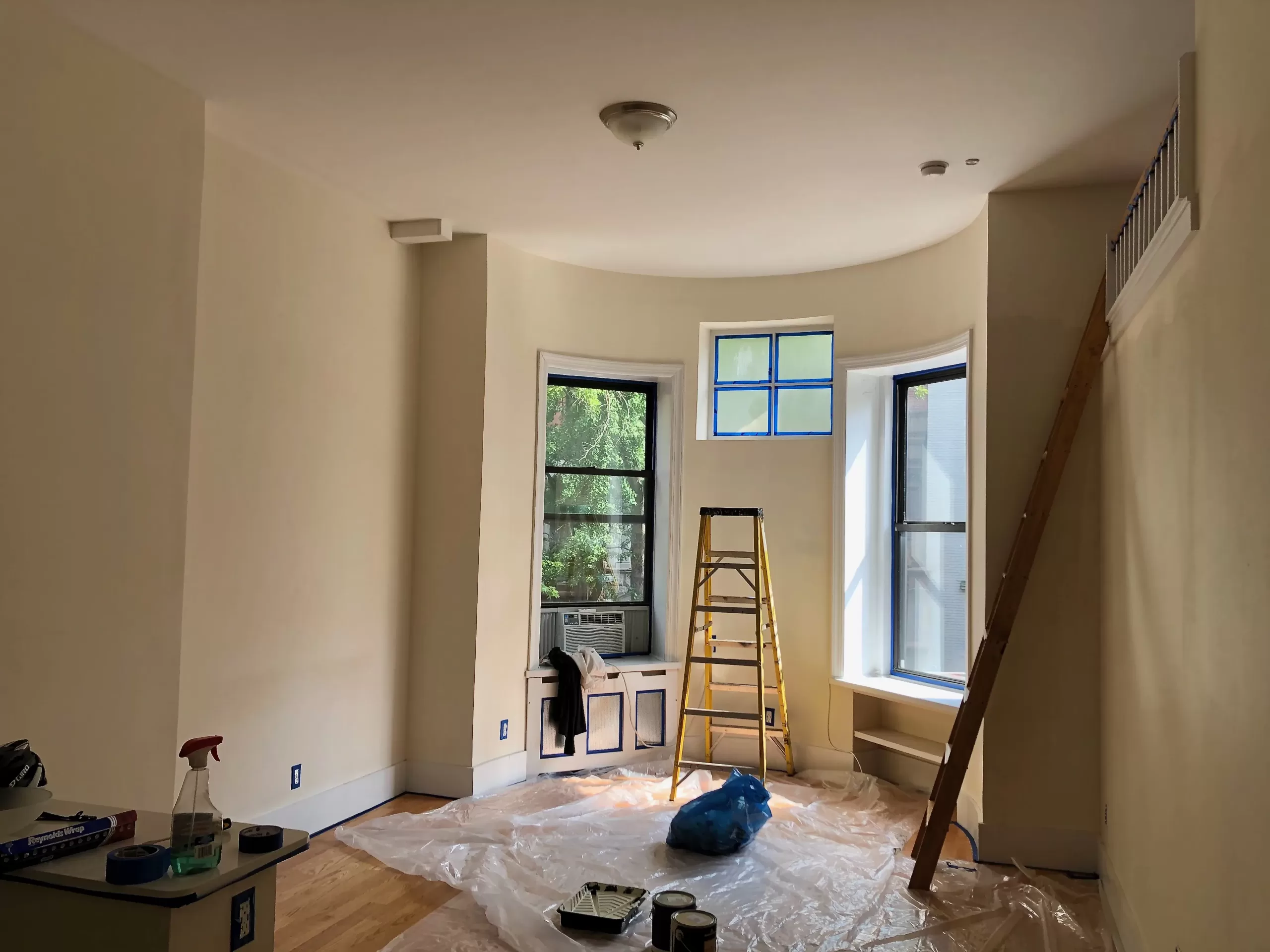

For property managers large and small, painting is often treated as a final step — something done after a tenant moves out, before a showing, or when walls start to look worn.
But in well-managed Metro NY residential and mixed-use properties , painting should be viewed differently.
A professional repaint is not just cosmetic. It is part of asset protection, tenant retention, faster turnover, and long-term maintenance planning.
Paint Impacts First Impressions
When a tenant, buyer, board member, or owner walks into a unit or common area, the walls immediately influence how the space feels.
Scuffed walls, mismatched touch-ups, yellowing trim, patch marks, and worn doors can make a property feel poorly maintained, even when the building itself is in good condition.
Fresh, clean paint communicates:
- The property is cared for
- Management is proactive
- The unit is move-in ready
- Common areas are being maintained
- Details matter
For property managers, that perception matters. It can affect leasing speed, tenant confidence, owner satisfaction, and renewal conversations.
Faster Turnovers Require a Painting Plan
Painting becomes more expensive and disruptive when it is handled reactively.
If every vacancy becomes a scramble — finding a painter, confirming colors, patching walls, matching old finishes, and scheduling around cleaners, supers, brokers, and move-ins — the turnover process slows down.
A better approach is to standardize the painting process before the vacancy happens.
Property managers should know:
- Standard wall color
- Standard trim color
- Preferred paint manufacturer
- Finish level for walls, trim, doors, and ceilings
- Typical unit repaint scope
- Touch-up vs. full repaint rules
- Average timeline for studios, one-bedrooms, and larger units
- Approved contractor contact and pricing structure
This turns painting from an emergency task into a predictable turnover system.
Standard Colors Save Time and Reduce Mistakes
One of the easiest ways for property managers to improve efficiency is to standardize colors across units and common areas.
When every apartment has different colors, finishes, or unknown touch-up history, even minor repairs become complicated.
Standardizing paint colors helps property managers:
- Speed up unit turns
- Reduce mismatched touch-ups
- Simplify maintenance inventory
- Improve consistency across units
- Make future repairs easier
- Avoid unnecessary full repaints
Neutral colors like soft whites, warm whites, and light greiges tend to work best for rental and resale environments because they photograph well, brighten spaces, and appeal to a wider audience.
Surface Prep Matters More Than Most People Realize
A fast repaint does not mean skipping prep.
For property managers, surface preparation is where long-term value is protected. Paint applied over dirt, failed patches, glossy surfaces, water stains, or poor drywall repairs will not perform properly.
Proper prep may include:
- Patching nail holes and wall damage
- Sanding rough repairs
- Spot priming repaired areas
- Addressing stains before finish paint
- Cleaning high-touch surfaces
- Caulking gaps at trim where appropriate
- Protecting floors, fixtures, and tenant improvements
This matters because poor prep leads to callbacks, complaints, and repeated work.
A good painting contractor should not only apply paint. They should help identify where a surface needs correction before paint goes on.
Common Areas Need a Different Strategy Than Units
Apartment units and common areas should not always be treated the same.
Units are usually about fast turnover and neutral presentation. Common areas are about durability, traffic resistance, and long-term maintenance.
Hallways, lobbies, stairwells, elevator vestibules, package rooms, laundry rooms, and amenity spaces experience constant use. These areas often require more durable paint systems and better scheduling coordination.
For common areas, property managers should consider:
- Washable finishes
- Scuff-resistant coatings where appropriate
- Durable trim and door paints
- Off-hour or phased work
- Clear tenant notices
- Protection of floors, elevators, and fixtures
- Touch-up procedures after move-ins or vendor work
The goal is to improve the building without creating unnecessary disruption.
Painting Helps Reduce Tenant Complaints
Many tenant complaints are visual.
A unit may be functional, but if walls are scuffed, trim is dirty, patching is visible, or paint colors feel dated, the tenant experience suffers.
Fresh paint can help reduce complaints related to:
- Move-in condition
- Dirty or worn walls
- Previous tenant damage
- Poor patching
- Inconsistent touch-ups
- Common-area wear
- Unit not feeling “ready”
For property managers, fewer complaints means less back-and-forth, fewer service tickets, and a smoother tenant experience.
Painting Should Be Part of the Annual Maintenance Budget
The best-managed properties in NY, NJ and CT do not wait until paint failure becomes obvious.
Instead, they budget for painting as part of ongoing maintenance.
That may include:
- Unit turnover painting
- Annual common-area touch-ups
- Scheduled hallway repaints
- Door and frame maintenance
- Lobby refreshes
- Stairwell repainting
- Exterior touch-ups where applicable
When painting is planned, pricing is more predictable, scheduling is easier, and the work can be coordinated with other maintenance items.
What Property Managers in NY, NJ and CT Should Look for in a Painting Contractor
The right painting contractor for property management work is not always the cheapest option.
Property managers should look for a contractor who understands:
- Turnover deadlines
- Tenant coordination
- Building access rules
- Insurance requirements
- Floor and elevator protection
- Standardized paint schedules
- Clean communication
- Fast but controlled execution
- Punch-list prevention
- Working around supers, brokers, cleaners, and other vendors
A good painting contractor should make the property manager’s job easier, not create another thing to manage.
Final Thought
Painting is one of the most visible parts of property management.
It affects how units show, how tenants feel, how common areas age, and how owners judge the condition of the asset.
When handled reactively, painting becomes a recurring headache.
When handled strategically, it becomes a tool for faster turnovers, better presentation, fewer complaints, and stronger property value.
For property managers, the goal should not be simply to “get the walls painted.”
The goal should be to create a repeatable, reliable painting process that keeps the property looking clean, maintained, and ready for what comes next.
#PropertyManagement #PropertyMaintenance #ApartmentTurnover #TenantTurnover #MultifamilyHousing #BuildingMaintenance #InteriorPainting #PaintingContractor #TurnoverReady #BeColouring